About the Author
Who made this book
Conceived, directed and published by Gunnar Nordqvist. The text was written by AI agents under his briefs and was reviewed and approved by him. He is not the author of the book in the ordinary sense of the word.
In plain words, the work was divided as follows.
- Gunnar Nordqvist chose the subject and the table of contents, wrote the brief for every chapter, set the author persona and the style rules, reviewed every change, approved what was published, and is responsible for the result.
- The AI agents drafted the prose, ran the checks on structure, citations and diagrams, and formatted the editions, all under those briefs and rules.
Elsewhere in the book, "the author" means Gunnar Nordqvist in that role: the person who conceived and directed the book and answers for it, not the writer of its sentences.
This book, like the other volumes of The Transformed Architecture, Architecture as Code and AI Governance, draws on decades of practice at the intersection of enterprise architecture, infrastructure engineering, information security, and organisational change. It is directed from the perspective of a practitioner who has watched architecture move from documents to code and who now applies the same discipline to artificial intelligence in large European organisations.
Gunnar Nordqvist
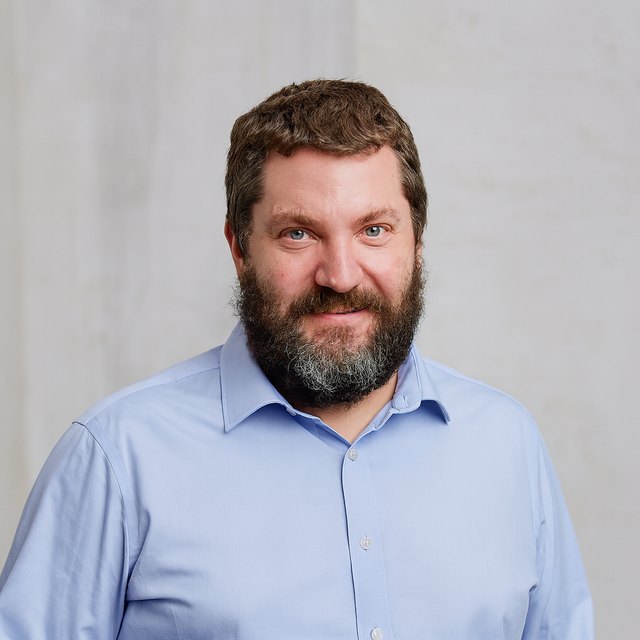
Gunnar Nordqvist is a self-employed certified Chief Architect and IT Architect consultant in the Kvadrat network, a Swedish consultancy network of independent specialists (82, Kvadrat, n.d.). As an IT generalist with a deep interest in technology, Gunnar has worked across diverse roles throughout his career, including IT architect, technical project manager, and systems technician.
Professional background
Gunnar's experience spans solution and enterprise architecture, IT infrastructure, and information security engagements for large enterprises and public authorities. His technical background encompasses network solutions, servers, virtualisation, cloud platforms, and IT security, and in recent years the architecture of data platforms and AI-enabled services in regulated settings.
Core areas of expertise:
- Solution and enterprise architecture
- Architecture as Code and Infrastructure as Code
- AI Architecture, model governance, and the European regulatory framework
- IT security, risk management, and compliance
- Cloud architecture, virtualisation, and digital sovereignty
- DevOps, CI/CD automation, and platform engineering
From Architecture as Code to AI Platform and Security
Architecture as Code argued that architecture becomes trustworthy when it is codified, version-controlled, and continuously validated (72, Nordqvist, 2025). AI Governance applies that argument to the risk, governance, and assurance of AI (73, Nordqvist, 2026), and this book applies it to the platforms that run AI and the security that protects them, in large European enterprises and public authorities. The conviction behind all three volumes is the same: that systems of consequence deserve engineering rigour, that governance works best when it is executable, and that European organisations can meet demanding regulation without sacrificing the pace of delivery.
About Kvadrat
Gunnar Nordqvist works as an independent consultant through Kvadrat, which describes itself as Sweden's largest network of self-employed consultants and has offices across Sweden (82, Kvadrat, n.d.).
Swedish terminology reference
Terminology note: The Swedish names used in this section keep their native form to preserve accuracy.
- Kvadrat AB –
ABstands for aktiebolag, Sweden's equivalent of a limited company. The firm's name translates literally to "square" but is always written as Kvadrat in branding. - Nordqvist – A Swedish family name combining nord ("north") and qvist ("twig"), reflecting traditional Swedish surname construction.
How this book was made
The books in this series, from AI Governance onwards, have been made differently from the way books are usually written. Most of the prose in this book was drafted by a team of specialist AI agents, each configured for a single role: a writer that drafts sections against a chapter brief, a researcher that locates and checks sources, an editor that applies the style guide, a critic that probes arguments for weaknesses, an architect that validates technical claims, and a graphic designer that produces the diagrams. Gunnar Nordqvist's part is less that of a writer at the desk than that of a conductor: setting the score, deciding who plays what, listening, stopping the orchestra and asking for a passage again.
The division of labour does not divide the responsibility. Four things remain his, and they are what a reader is entitled to hold a person to account for:
- The design of the book. The choice of subject, the table of contents, the brief for every chapter, the author persona, the style guide and the rules the agents work under are written by him and kept in the repository alongside the manuscript.
- Review and approval. Every change reaches the manuscript through a pull request that he reads and then redirects, rejects or approves. Nothing is published that he has not accepted.
- Judgement. The positions the book takes, its recommendations and its projections are his, including the passages written in the first person, even where an agent found the words for them.
- Sources. He answers for the bibliography. Automated checks confirm that every citation points to an entry that exists; he checks, by sampling where the volume requires it, that the sources say what the text claims. Errors that remain are his, not the agents'.
The agents work inside the same kind of loop this book recommends for AI platforms. In the terms of Chapter 2, they are a Mode 3 agentic work tool confined to a repository. Their output is versioned, validated in continuous integration by tests of structure, citations, diagrams and numbering, and released only through a human approval gate, much as Chapter 8 describes for the DevSecMLOps loop. In a modest way, the book is a working example of its own subject: what makes the result trustworthy is not the model that drafted it but the pipeline, the gates and the person who answers for what passes through them.
The book's technical foundation
All three volumes are produced with the same automated publishing pipeline: Markdown manuscript, Mermaid diagrams, Pandoc and XeLaTeX for PDF, EPUB, and DOCX, MkDocs for the website, and GitHub Actions for continuous validation. The pipeline is itself an example of Architecture as Code applied to publishing, and its structure is described in the repository documentation.